
All explainers · Reading a transit network
Two different ways to connect travellers to transit
Animation paused (reduced motion). Press play to watch.
In one sentence
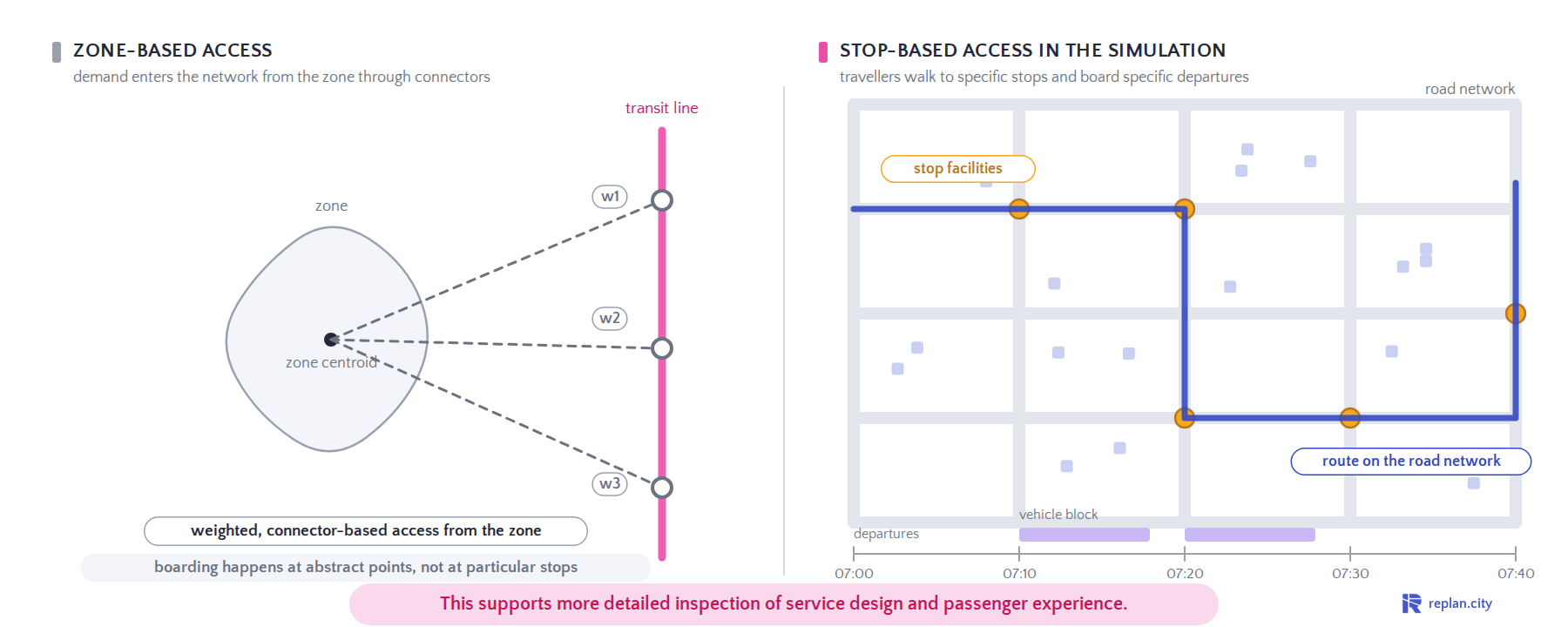
This supports more detailed inspection of service design and passenger experience.
Why it matters
Zone-based: demand enters the line from the zone through weighted connectors, boarding at abstract points. Stop-based: the road network is built first, then the stop facilities, the route on that network and the departures; travellers walk to a specific stop and board a specific departure, and each vehicle’s load follows from that.
A network is more than its total demand: where the vehicle fills, where people wait, where a feeder change shifts transfers. Reading a line stop by stop, from one simulation run, is the difference between a forecast and a planning tool.
Sources
- Schematic illustration; values are illustrative
- Final frame: Replan.City network editor, Pink Line
What you see
- 00.0Zone-based access via connectors
- 05.0Road network and stop facilities
- 08.0Route on the network
- 11.0Departures and vehicle block
- 16.5Replan.City network editor
Use this explainer
MP4 (1800×720) · GIF (1200 px) · Poster (PNG)

Embed: <iframe src="https://www.replan.city/explains/embed/stop-based-access?lang=en" width="900" height="360" style="border:0;max-width:100%;aspect-ratio:5/2" loading="lazy" title="Two different ways to connect travellers to transit"></iframe>
Paste into any page; the explainer plays as live SVG (no video file).
Licence: CC BY 4.0 — reuse freely with the line “Replan GmbH · replan.city/explains”. The Replan mark in the corner stays.
More: Transit service planning with Replan
See it on your own network
Book a demoRelated explainers
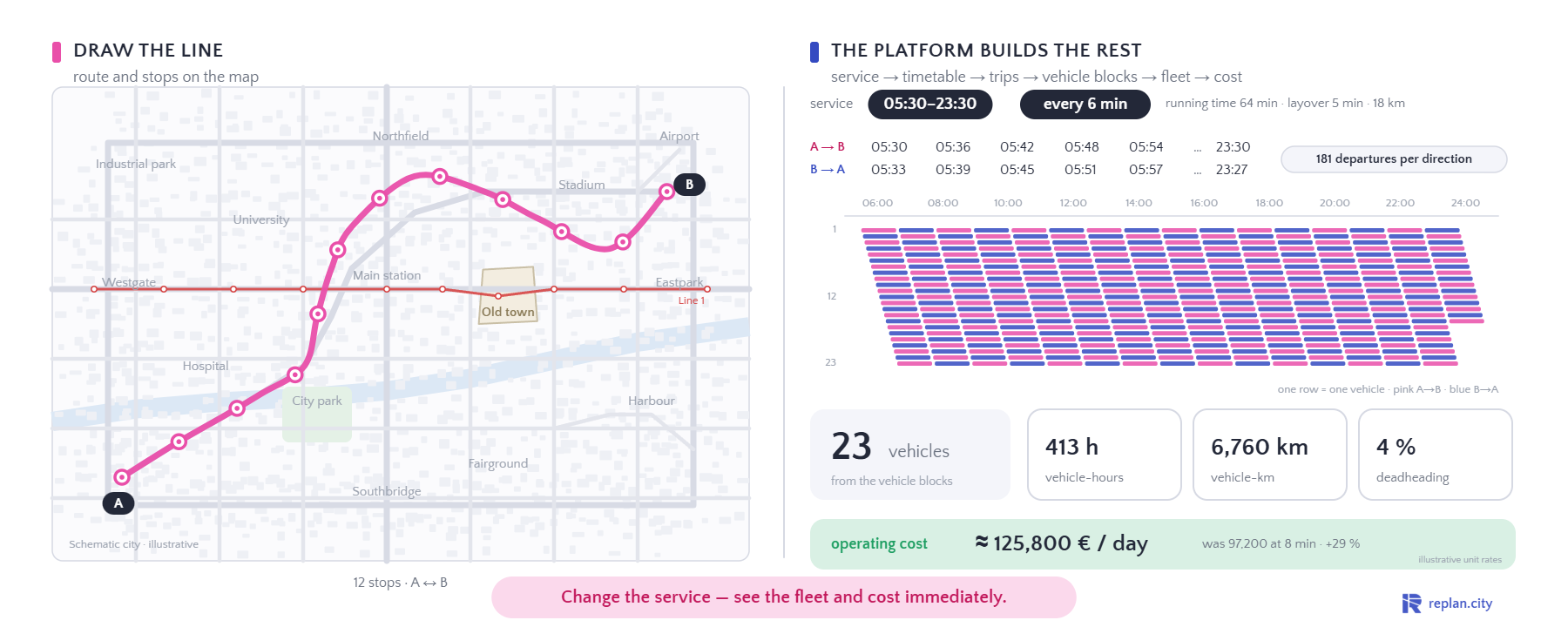
From a line sketch to buses and cost
Change the service — see the fleet and cost immediately.
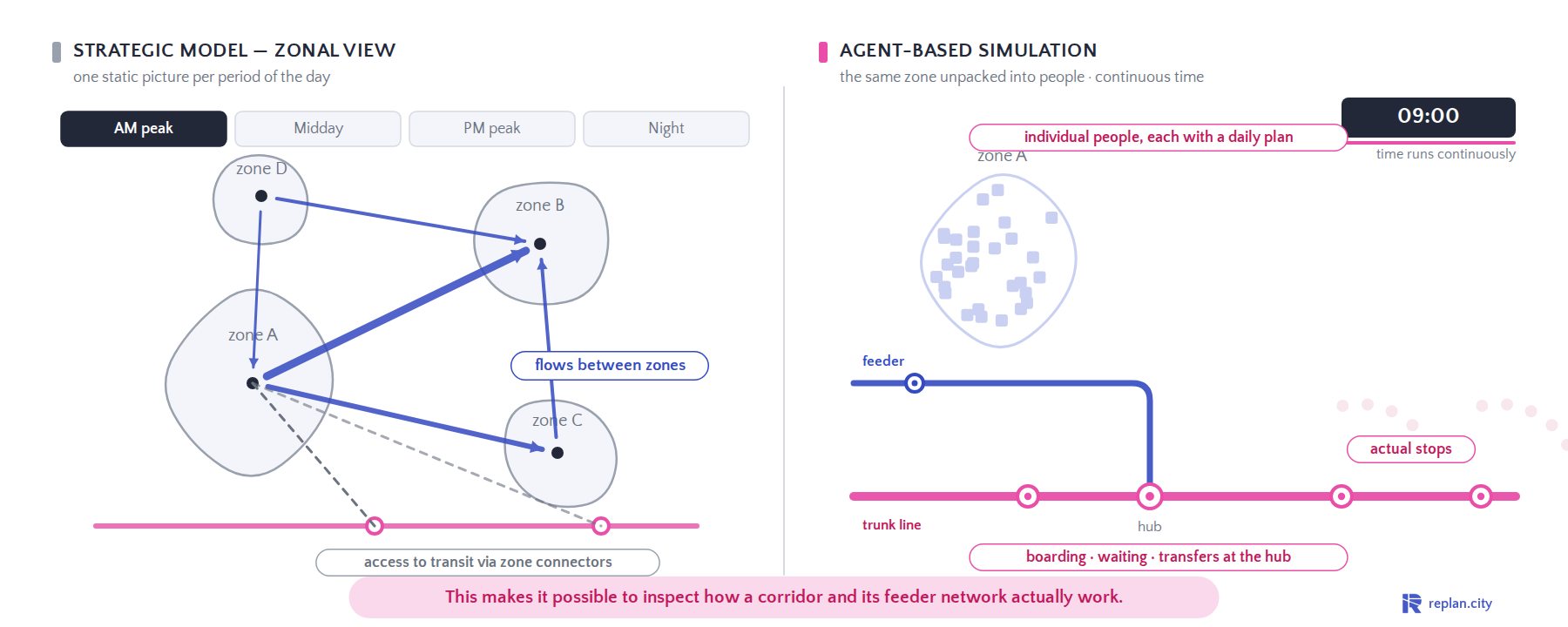
From zonal flows to individual journeys
This makes it possible to inspect how a corridor and its feeder network actually work.
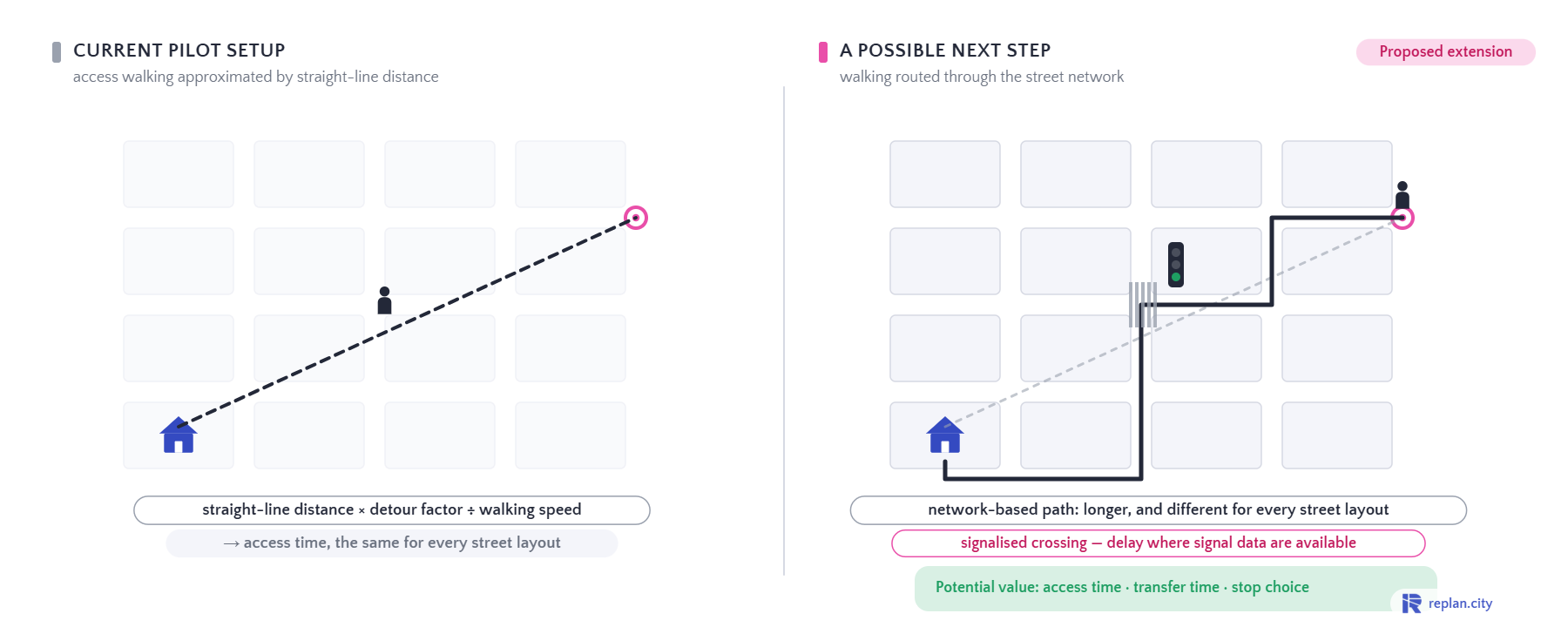
From straight-line walking to network-based walking
Potential value: access time, transfer time, stop choice.